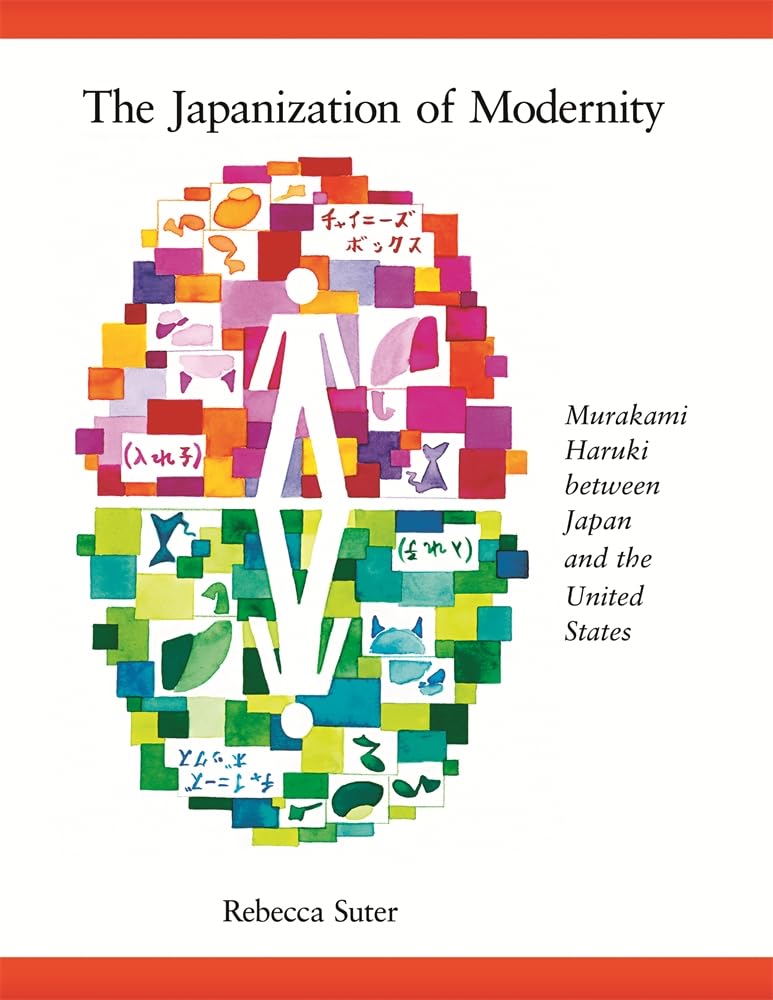
The japanization of modernity
Type doc. :
Langue :
Auteur(s) :
Editeur(s) :
Année d'édition :
ISBN :
Afficher le Résumé
Murakami Haruki is perhaps the best-known and most widely translated Japanese author of his generation. Despite Murakami's critical and commercial success, particularly in the United States, his role as a mediator between Japanese and American literature and culture is seldom discussed. Bringing a comparative perspective to the study of Murakami's fiction, Rebecca Suter complicates our understanding of the author's oeuvre and highlights his contributions not only as a popular writer but also as a cultural critic on both sides of the Pacific. Suter concentrates on Murakami's short stories--less known in the West but equally worthy of critical attention--as sites of some of the author's bolder experiments in manipulating literary (and everyday) language, honing cross-cultural allusions, and crafting metafictional techniques. This study scrutinizes Murakami's fictional worlds and their extraliterary contexts through a range of discursive lenses: modernity and postmodernity, universalism and particularism, imperialism and nationalism, Orientalism and globalization.
| N° Bulletin | Date / Année de parution | Titre N° Spécial | Sommaire |
|---|
| N° d'Exemplaire / inventaire | Cote | Localisation | Type de Support | Type de Prêt | Statut | Date de Restitution Prévue | Réservation |
|---|---|---|---|---|---|---|---|
| 314A25 | 751.5 SUT C1 | BIB-Centrale / Ouvrages | Papier | interne | disponible |