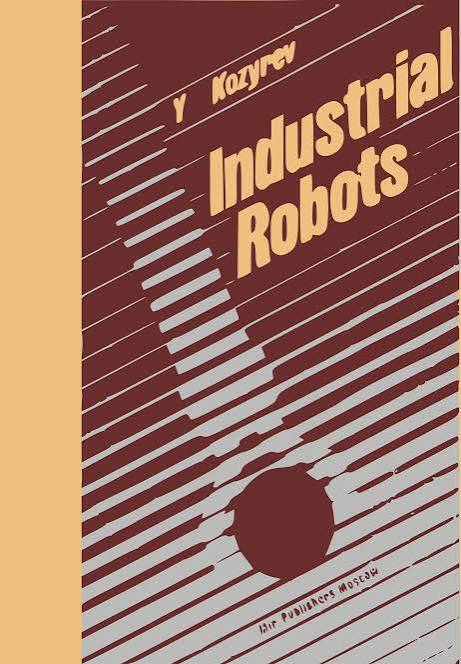
Industrial robots handbook
Type doc. :
Langue :
Auteur(s) :
Editeur(s) :
Année d'édition :
Thème :
Afficher le Résumé
Industrial robots are being used more and more in many fields of industry where they are replacing human operators engaged in onerous, repetitive, or potentially hazardous jobs. a particular point in favor of robots is that they can be taught to do jobs which are not amenable to automation or mechaniza¬tion through conventional approaches. robot systems are certainly only one of the many possible means of automating and simplifying the production process. they pave the way to a qualitatively new stage of automation, namely, the development of production systems which would require a minimum human attendance. one of the main advantages of industrial robots is that they can be quickly reprogrammed to undertake tasks that differ in sequence and character of mani¬pulation steps. robots are therefore most cost-effective in conditions of frequent product changes and in automation of jobs requiring manual unskilled labor. a major share of the products of the metal-working and machine-building industries come in low-volume batches. it is essential to evolve automatic assembly machines suitable for short and medium production runs. of no less importance is to ensure fast retooling of automatic lines and putting them on stream as fast as possible. industrial robots can be harnessed to handle not only the main tasks but also auxiliary ones, which explains why they are generating ever greater in¬ terest.
| N° Bulletin | Date / Année de parution | Titre N° Spécial | Sommaire |
|---|
| N° d'Exemplaire / inventaire | Cote | Localisation | Type de Support | Type de Prêt | Statut | Date de Restitution Prévue | Réservation |
|---|---|---|---|---|---|---|---|
| 810072A86 | 629.892 KOZ 2 C1 | BIB-Centrale / Ouvrages | Papier | interne | disponible |