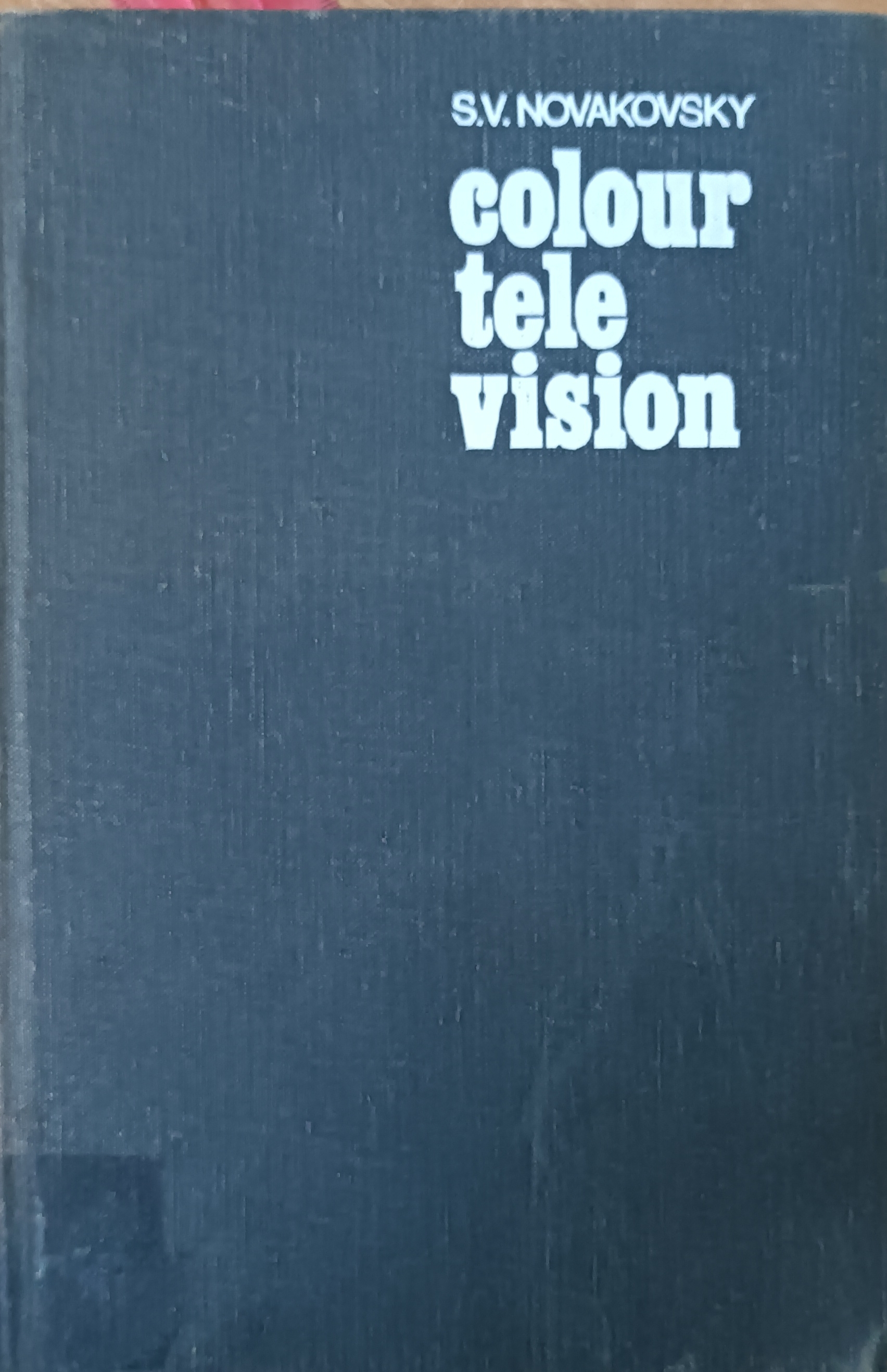
colour television
Type doc. :
Langue :
Auteur(s) :
Editeur(s) :
Année d'édition :
Thème :
Afficher le Résumé
Colour television a theory of colour reproduction is a technical work devoted to the scientific and engineering principles of color television systems and image reproduction. the book explains how color images are generated, transmitted, processed, and reproduced with fidelity in television technology. the author examines the physical and physiological foundations of color perception, including human vision, color matching, chromaticity, and brightness sensitivity. it describes how these visual principles are applied in television engineering to reproduce realistic colors on display screens. major topics include: • fundamentals of color science • trichromatic theory of vision • colorimetry and chromaticity diagrams • additive and subtractive color systems • television scanning and image formation • encoding and decoding of color signals • ntsc, pal, and secam color television standards • luminance and chrominance processing • bandwidth and signal compatibility • synchronization and modulation techniques • camera tubes and display technologies • color picture tubes and phosphors • signal distortion and color errors • gamma correction • transmission systems • image quality and color fidelity • studio and broadcast techniques the book combines theoretical analysis with practical television engineering, making it valuable for students and professionals in electronics, broadcasting, telecommunications, and video engineering. it reflects the transition period when analog color television systems became highly developed and standardized worldwide.
| N° Bulletin | Date / Année de parution | Titre N° Spécial | Sommaire |
|---|
| N° d'Exemplaire / inventaire | Cote | Localisation | Type de Support | Type de Prêt | Statut | Date de Restitution Prévue | Réservation |
|---|---|---|---|---|---|---|---|
| 54A24 | 621.381 NOV 1 C1 | BIB-Centrale / Ouvrages | Papier | interne | disponible |