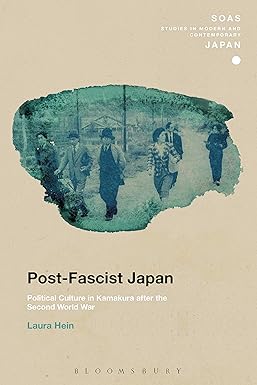
Post fascist japan
Type doc. :
Langue :
Auteur(s) :
Année d'édition :
Thème :
ISBN :
Afficher le Résumé
In late 1945 local Japanese turned their energies toward creating new behaviors and institutions that would give young people better skills to combat repression at home and coercion abroad. They rapidly transformed their political culture-policies, institutions, and public opinion-to create a more equitable, democratic and peaceful society. Post-Fascist Japan explores this phenomenon, focusing on a group of highly educated Japanese based in the city of Kamakura, where the new political culture was particularly visible. The book argues that these leftist elites, many of whom had been seen as 'the enemy' during the war, saw the problem as one of fascism, an ideology that had succeeded because it had addressed real problems. They turned their efforts to overtly political-legal systems but also to ostensibly non-political and community institutions such as universities, art museums, local tourism, and environmental policies, aiming not only for reconciliation over the past but also to reduce the anxieties that had drawn so many towards fascism.
| N° Bulletin | Date / Année de parution | Titre N° Spécial | Sommaire |
|---|
| N° d'Exemplaire / inventaire | Cote | Localisation | Type de Support | Type de Prêt | Statut | Date de Restitution Prévue | Réservation |
|---|---|---|---|---|---|---|---|
| 343A25 | 952 HEI C1 | BIB-Centrale / Ouvrages | Papier | interne | disponible |