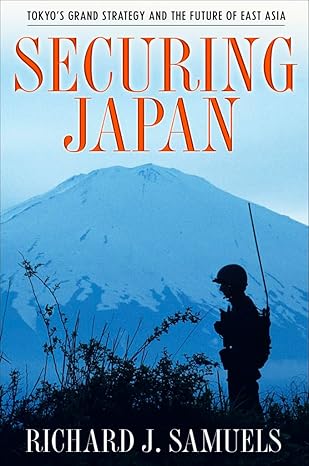
Securing Japan
Type doc. :
Langue :
Auteur(s) :
Editeur(s) :
Année d'édition :
Thème :
ISBN :
Afficher le Résumé
For the past sixty years, the U.S. government has assumed that Japan's security policies would reinforce American interests in Asia. The political and military profile of Asia is changing rapidly, however. Korea's nuclear program, China's rise, and the relative decline of U.S. power have commanded strategic review in Tokyo just as these matters have in Washington. What is the next step for Japan's security policy? Will confluence with U.S. interests―and the alliance―survive intact? Will the policy be transformed? Or will Japan become more autonomous? Richard J. Samuels demonstrates that over the last decade, a revisionist group of Japanese policymakers has consolidated power. The Koizumi government of the early 2000s took bold steps to position Japan's military to play a global security role. It left its successor, the Abe government, to further define and legitimate Japan's new grand strategy, a project well under way-and vigorously contested both at home and in the region.
| N° Bulletin | Date / Année de parution | Titre N° Spécial | Sommaire |
|---|
| N° d'Exemplaire / inventaire | Cote | Localisation | Type de Support | Type de Prêt | Statut | Date de Restitution Prévue | Réservation |
|---|---|---|---|---|---|---|---|
| 373A25 | 327.51 SAM C1 | BIB-Centrale / Ouvrages | Papier | interne | disponible |