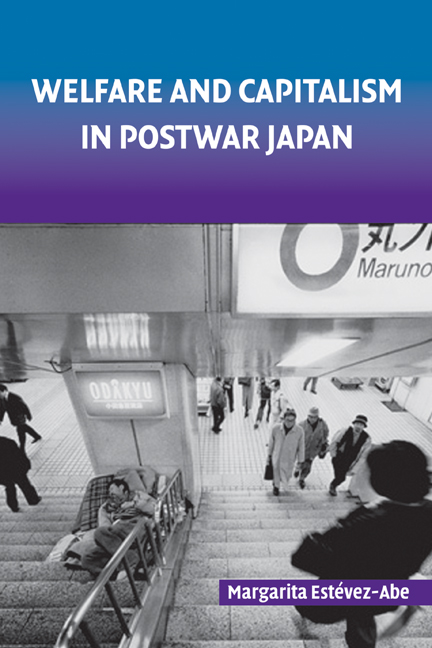
Welfare and capitalism in postwar Japan
Type doc. :
Langue :
Auteur(s) :
Editeur(s) :
Année d'édition :
Thème :
ISBN :
Afficher le Résumé
This book explains how postwar Japan managed to achieve a highly egalitarian form of capitalism despite meager social spending. Estevez-Abe develops an institutional, rational-choice model to solve this puzzle. She shows how Japan's electoral system generated incentives that led political actors to protect various groups that lost out in market competition. She explains how Japan's postwar welfare state relied upon various alternatives to orthodox social spending programs. The initial postwar success of Japan's political economy has given way to periods of crisis and reform. This book follows this story up to the present day. Estevez-Abe shows how the current electoral system renders obsolete the old form of social protection. She argues that institutionally Japan now resembles Britain and predicts that Japan's welfare system will also come to resemble Britain's. Japan thus faces a more market-
| N° Bulletin | Date / Année de parution | Titre N° Spécial | Sommaire |
|---|
| N° d'Exemplaire / inventaire | Cote | Localisation | Type de Support | Type de Prêt | Statut | Date de Restitution Prévue | Réservation |
|---|---|---|---|---|---|---|---|
| 351A25 | 330.952 ABE C1 | BIB-Centrale / Ouvrages | Papier | interne | disponible |